Top List of Domain Extensions
There are tons of valid domain extensions. The high rate of internet users has made provision for other web domain extensions besides .com, net, and .org.
Someone asked me, "What are the five most common domain extensions?"
Answer: The most popular domain extensions are .com, .net, .co, .org, .info.
Surprisingly, many have found hundreds of options when it comes to using a domain for their website.
Of course, there are valid domain name extensions for specific purposes like .mobi for a mobile site, .travel for the travel industry, or .jobs for HR departments.
Besides these generic top-level domains, there are also country code domains, which are extensions based on countries or geographic locations.
The Internet Assigned Number Authority (IANA) is the source of valid top-level domains (TLDs). They are also responsible for maintaining the official list at the root zone database.
Do you know that? The Internet Corporation for Assigned Names and Numbers is in charge of introducing new TLDs.
What is Domain Extension?
A domain extension is the last part of your website domain name. It gives information about your website address, category, or country.

What is a gTLD?
gTLDs or generic top-level domains are general-purpose domains and are some of the most common TLDs on the web.
Here are 7 frequently used generic TLDs
- .edu (education)
- .gov (government)
- .biz (business)
- .me (personal)
- .mil (military)
- .co (company)
- .info (information)
Here is a list of Top-Level Domains
- .int
- .edu
- .gov
- .mil
- .lnc
- .is
- .dev
- .travel
- .info
- .biz
- .email
- .build
- .agency
- .zone
- .bid
- .condos
- .dating
- .events
- .maison
- .partners
- .properties
- .productions
- .social
- .reviews
- .tech
What are ccTLDs?
ccTLDs, or country code top-level domains, are assigned to specific countries like .in for India, and .jp for Japan. A few of them are restricted to those who live and work in these locations, but anyone can register many.
Here is a list of Top–Level – Domain Country Code (TLDs)
- .ac (Ascension Island)
- .ad (Andorra)
- .ae ( United Arab Emirates)
- .af (Afghanistan)
- .an (Antilles Netherlands)
- .ao (Angola)
- .aq (Antarctica)
- .ar (Agentina)
- .as ( American Samoa)
- .at ( Austral)
- .au ( Australia)
- .bb (Barbados)
- .bf ( Burkina Faso )
- .bg ( Bulgaria)
- .bi ( Burundi)
- .bm (Bermuda )
- .br (Brazil)
- .bw (Botswana)
- .ca (Canada)
- .cd ( Democratic Republic of the Congo)
- .cl (Chile)
- .cm ( Cameroon)
- .cn ( China)
- .co (Colombia)
- .cr Costa Rica)
- .cu (Cuba)
- .cy ( Cyprus)
- .cz ( Czech Republic )
- .de ( Germany)
- .dk (Denmark)
- .dm ( Dominica
- .ec ( Ecuador)
- .eg ( Egypt)
- .es ( Spain)
- .et ( Ethopia)
- .fr ( France)
- .ga (Gabon)
- .gh ( Ghana)
- .gm (Gambia)
- .gq ( Equatorial Guinea)
- .gr (Greece)
- .hk (Hong Kong)
- .hr (Croatia)
- .hu ( Hungary)
- .id ( Indonesia)
- .ie ( Ireland)
- .in ( India)
- .iq ( Iraq)
- .il (Israel )
- .it ( Italy)
- .jp (Japan)
- .jo (Jordan)
- .kr ( Republic of Korea
- .ke ( Kenya)
- .kw ( Kuwait)
- .lb (Liberia)
- .ly ( Libya)
- .ma (Morocco)
- .mc ( Monaco)
- .mx ( Mexico)
- .my ( Malaysia)
- .mu ( Mauritius)
- .ne ( Niger)
- .ng (Nigeria)
- .ni ( Netherlands)
- .no ( Norway)
- .nz (Zealand )
- .pe (Peru)
- .ph ( Philippines)
- .pt (Portuagal
- .py ( paraguay)
- .ro ( Romania
- .rn ( Russia
- .rw (Rwanda)
- .sa ( Saudi Arab
- .sd (Sudan )
- Se. (Sweden)
- .sg ( Singapore)
- .sl (Sierra Leone)
- .td ( Chad)
- .tg ( Togo)
- .th (Thailand)
- .tr (Turkey)
- .tz (Tanzania)
- .ua ( Ukraine)
- .ug (Uganda)
- .uk (United Kingdom)
- .us ( United States)
- .va ( Vatican City )
- .ve ( Venezuela)
- .ws ( Samoa)
- .wf ( wallis and futuna)
- .yt ( Mayote)
- .za ( South Africa )
- .zm ( Zambia)
- .zw ( Zimbabwe)
Why ccTLDs Matter?
- They are important for international SEO
- A way to show search engines and users that the content is targeted at a country
- Google assumes that a site and all the content on it are relevant to the geographical area when it uses ccTLD.
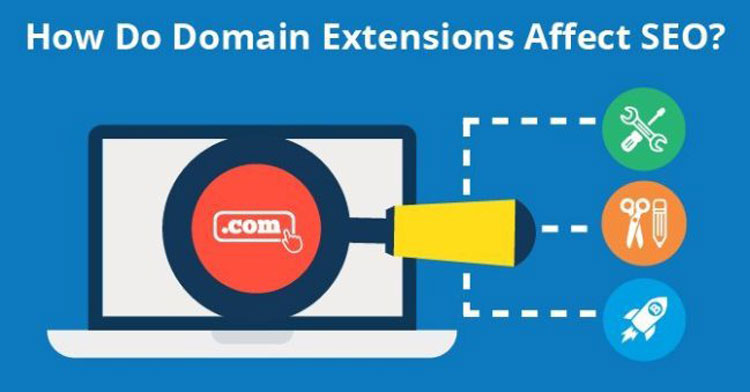
The Impact of Domain Extension on Your SEO
According to Bill Hartzer Dallas-based SEO expert, if a newly registered domain name is compared with another newly registered domain name. When it comes to search engine ranking, Google gives both the same weight.
When creating your website, the choice of the domain extension is important; domains that contain keywords will impact your SEO performance. A recent survey conducted by MOZ has shown that your domain extension has a slight effect on your ranking, as Google counts more factors into the ranking.
Another study from Stone Temple shows that links do matter in improving SEO ranking. The domain extension can lead to conversion; your website is viewed differently by visitors. Some domain extensions can be seen as spam or considered as a reference.
Do you know it’s how the public treats domain names that have an impact on search engine rankings?
Do not underestimate people’s navigation habits.
With thousands of available domain extensions out there, it’s difficult to choose the one to use.
In addition to choosing the right domain extension, there are several things you can do to improve your website's SEO. Here are a few tips:
- Keyword research: Identify the keywords that your target audience is using to search for websites like yours. Once you have identified these keywords, you can incorporate them into your website's content, meta descriptions, and title tags.
- Content creation: Create high-quality, informative content that is relevant to your target audience. Your content should be well-written and engaging.
- Backlinks: Backlinks are links from other websites to your website. Having high-quality backlinks from relevant websites can help improve your website's ranking in search results.
- Website speed: Make sure your website loads quickly. A slow website will discourage visitors and can hurt your SEO.
- Mobile-friendliness: Make sure your website is mobile-friendly. More and more people are using mobile devices to browse the web, so it is important to make sure your website looks good and functions well on these devices.
By following these tips, you can improve your website's SEO and make it more likely that people will find your website when they are searching for information online.
Here are some known Facts to Guide You
- Country domain extensions can be a smart choice if you're targeting certain audiences in a country, like .uk for UK residents or .es for Spanish-speaking audiences. This can favor your SEO strategy.
- You have a lot of TLDs to choose from that are industry-related, like pizza, but very few of them rank well globally.
- Site quality remains at the top of the ranking factor, and domain extensions will not have a chance to rule.
- Google has specified how it treats domain names and new domain extensions. The new extensions will have no ranking advantage over .com, .org domains.
- According to the study by MOZ, .com domain extensions give better results compared to .edu, .biz, and a bit higher than .com. Domain extensions don’t affect SEO ranking on their own. Quality content and a rich keyword are major factors.
Now you know better and should share what you've learned. As you have seen, TLDs are at the core. There’s no better time to join the success train than now!
I hope this guide has changed your view and shown that domain extension is not restricted to .com, .net, and .org. Now, you're aware of the list of valid domain extensions.
Are you ready to set sail with the knowledge you’ve gained?
Let us in on your biggest take-home, leave a comment below…